Hours, directions, entrances and the best time to arrive
Lone Pine Koala Sanctuary visitor guide
Lone Pine Koala Sanctuary is a wildlife sanctuary best known for its koalas, free-roaming kangaroos, and close-up encounters with Australian animals. The visit is easy to enjoy, but it works best if you plan around keeper talks and the late-morning cruise arrival, when the front koala precinct gets noticeably busier. It is bigger and more spread out than many first-time visitors expect, so a loose route matters. This guide covers timings, arrival options, tickets, and what to prioritize.
Quick overview: Lone Pine Koala Sanctuary at a glance
If you want a simple answer first, here is what will actually shape your day at Lone Pine.
- When to visit: Monday–Sunday, 9am–5pm. Weekday opening time or after 2:30pm is noticeably calmer than 10:30am–1pm, because the cruise arrival and biggest keeper talks bunch crowds into the front koala area.
- Getting in: From A$59 for standard entry. Guided tours from A$150. Standard entry is usually fine as a walk-up outside school holidays, but koala encounters and premium tours are safer to book ahead in July, December, and January.
- How long to allow: 2–4 hours for most visitors. It pushes to the longer end if you want both major shows, time in the kangaroo reserve, and one paid animal encounter.
- What most people miss: The Platypus House and the sheepdog show add much more than people expect, but both are easy to skip if you stay too long at the front koala habitats.
- Is a guide worth it? Yes for premium or behind-the-scenes animal access, but for a standard visit the printed map, daily schedule, and keeper talks usually do the job for less.
🎟️ Koala encounter slots for Lone Pine Koala Sanctuary can sell out days ahead during school holidays and the December–January peak. Lock in your visit before the time you want is gone. See ticket options
Jump to what you need
🕒 Where and when to go
🗓️ How much time do you need?
Visit lengths, suggested routes and how to plan around your time
🎟️ Which ticket is right for you?
Compare all entry options, tours and special experiences
🗺️ Getting around
How the park is laid out and the route that makes most sense
🦘 Which animals to prioritise
Koalas, kangaroos, and platypus
♿ Facilities and accessibility
Restrooms, lockers, accessibility details and family services
Where and when to go
How do you get to Lone Pine Koala Sanctuary?
Fig Tree Pocket sits on the Brisbane River about 12km southwest of central Brisbane, and the sanctuary is easiest from the city by car, bus, or the Mirimar cruise.
708 Jesmond Road, Fig Tree Pocket QLD 4069, Australia
- Bus: Route 430 from Queen Street Bus Station → about 45 min → stops right outside the gate.
- Bus: Route 445 from the CBD via Paddington → about 50 min → useful if the 430 timing does not suit.
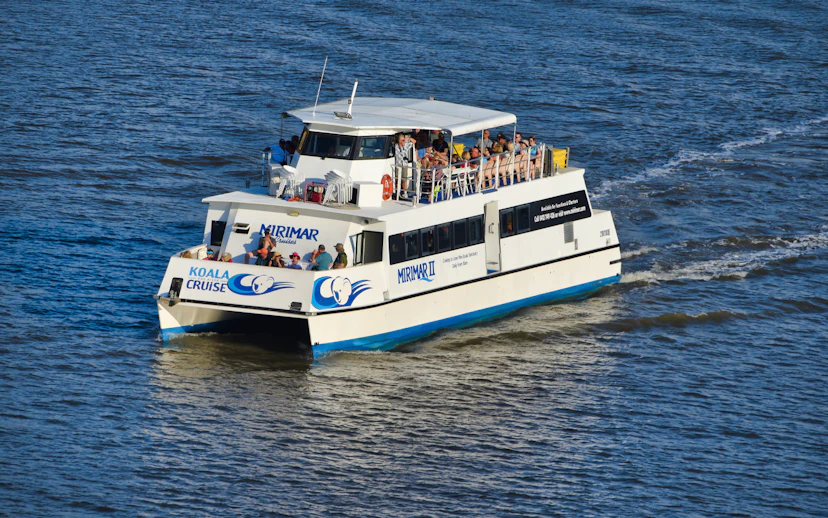
- River cruise: Mirimar from South Bank → about 1 hr 15 min → scenic drop-off at the sanctuary jetty around 11:15am.
- Car: On-site parking → 20–25 min from the CBD → free lot beside the entrance with no pre-booking needed.
Full getting there guide
Which entrance should you use?
Lone Pine keeps things simple: there is one main visitor entrance, and the mistake most people make is arriving right before a big show and losing time at the gate.
- Located off Jesmond Road beside the main parking area. Expect 5–15 min wait during school-holiday mornings and around 11:15am when the river cruise arrives.
Full entrances guide
When is Lone Pine Koala Sanctuary open?
- Monday–Sunday: 9am–5pm
- Kangaroo Reserve feeding access: 9am–4:30pm
- Last entry: 4pm
When is it busiest?
Weekends, Queensland school holidays, and 10:30am–1pm are busiest because the cruise arrival and biggest keeper talks stack into the same window.
When should you actually go?
Weekday opening time or after 2:30pm gives you shorter encounter lines, cooler kangaroo feeding, and more breathing room around the koala habitats.
How much time do you need?
| Visit type | Route | Duration | Walking distance | What you get |
|---|---|---|---|---|
Highlights only | Entry plaza → Koala Forest → Kangaroo Reserve → Platypus House → exit | 2–2.5 hrs | ~2km | Covers the signature Australian animals and one major stop, but you will skip slower exhibits like reptiles, devils, and the farm arenas. |
Balanced visit | Koalas → morning show → Kangaroo Reserve → Platypus House → reptiles and crocodile → wombats and devils → exit | 3–4 hrs | ~3km | Adds the keeper talks and the less obvious habitats that make the visit feel richer, without turning the day into a full-day commitment. |
Full exploration | Full sanctuary loop including koala precincts, both major shows, Kangaroo Reserve, Platypus House, reptile and crocodile exhibits, wombats, devils, lorikeet feeding, and one paid encounter | 4.5–6 hrs | ~4km | Gives you time to follow the day’s schedule properly rather than rush, but it only pays off if you pace yourself and build in a lunch break. |
Which Lone Pine Koala Sanctuary ticket is best for you
| Ticket type | What's included | Best for | Price range |
|---|---|---|---|
Single-Day Admission Pass | Full-day entry + daily shows + keeper talks + kangaroo reserve access | A flexible visit where you want the core sanctuary experience first and will decide on extras once you are inside. | From A$59 |
Wildlife Encounters – Koala | Supervised koala touch-and-photo session + use of your own camera; admission separate | If leaving without a close koala photo would feel like the one thing you regretted. | From A$35 |
Koala Discovery Tour | Guided koala-focused tour + behind-the-scenes access | A koala-first visit where you want more context and closer keeper-led access than the general route gives you. | From A$150 |
Mirimar Koala and River Cruise | Round-trip river cruise + sanctuary entry + onboard commentary | If you want the journey to feel like part of the day and would rather avoid driving or bus timing. | From A$85 |
Platinum Tour | Private guide + sanctuary entry + multiple encounters + meals + souvenir photos | A full-day splurge where you want the route, timings, and premium animal access handled for you. | From A$599 |
How do you get around Lone Pine Koala Sanctuary?
Lone Pine spreads across 18 hectares in several open-air zones, with 2–3 hours enough for the highlights and 4–5 hours better if you want shows, kangaroos, and the quieter exhibits. Cruise arrivals tend to bunch people into the front koala precinct, so either start there right at 9am or leave it until after the late-morning rush.
Sanctuary zones and suggested route
- Main koala precinct → multiple koala habitats and talks → 30–45 min.
- Kangaroo Reserve → free-roaming kangaroos, wallabies, and emus → 30–45 min.
- Farm and show arenas → sheepdog show, raptor show, and barnyard areas → 45–60 min around schedules.
- Riverside wildlife zone → Platypus House, crocodile, reptiles, wombats, and devils → 45–60 min.
Suggested route: If you are there at opening, do koalas first and then move outward; if you arrive later, start deep at the Kangaroo Reserve, loop through Platypus House and reptiles, and come back to koalas after the biggest crowd wave has passed.
Maps and navigation tools
- Map: Free printed map → covers habitats, show arenas, and encounter points → pick it up at the entrance.
- Signage: Main wayfinding is decent, but the Platypus House and back arenas are easier to miss without the map.
- Audio guide / app: There is no official audioguide doing the heavy lifting here, so the printed map and daily keeper schedule matter more.
- Large outdoor POIs only: You will not need trail apps, but a guided tour helps if you want to line up shows and encounters without backtracking.
💡 Pro tip: Grab the paper map before you head into the kangaroo reserve — once you drift to the back arenas, it is easy to miss the platypus house on the return loop.
Get the Lone Pine Koala Sanctuary map / audio guide
Which animals and habitats should you prioritise?

1/6
Koala Forest
Species: Koala
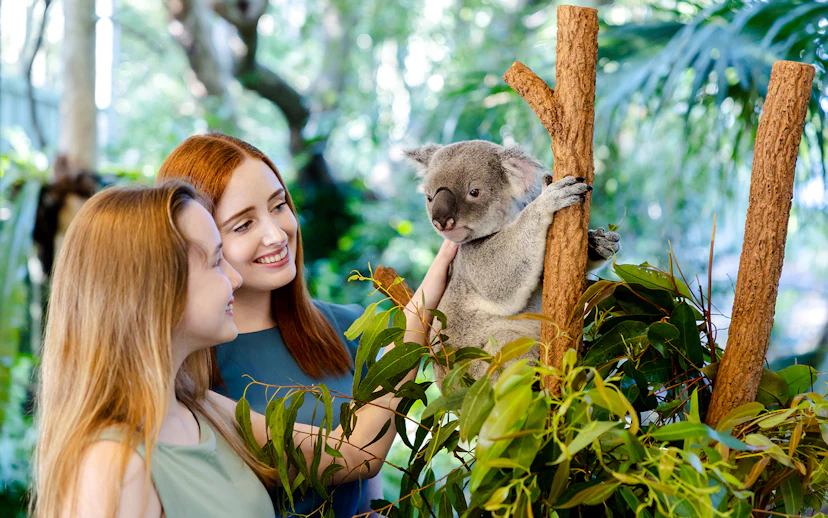
This is the emotional center of the sanctuary, and it is where you get the closest sense of how many koalas Lone Pine actually cares for. Most visitors stop for the obvious sleeping koalas, but the better moment is finding one that is actively feeding or a mother with a joey tucked close. Slow down long enough to compare the different enclosures — you will notice distinct family groups rather than one repeated display.
Where to find it: In the main front koala precinct just after the entrance paths split.
Kangaroo Reserve
Species: Eastern grey kangaroo and wallaby mix
The Kangaroo Reserve is the most interactive part of the day, with wide open space and animals that usually feel calmer than first-time visitors expect. Most people rush to the first kangaroos near the path, but the quieter photo moments are often farther into the field under the shade trees. This is also where you are most likely to spot a joey peeking out of a pouch.
Where to find it: In the large open paddock toward the middle-to-back section of the sanctuary.
Platypus House
Species: Platypus
This is one of the rare chances to see a platypus well, which is exactly why it should not be treated as a quick pass-through. The room is dim and many visitors give up too fast, but if you wait a few minutes your eyes adjust and movement becomes much easier to spot. It is one of the least flashy exhibits and one of the most rewarding.
Where to find it: In the riverside wildlife zone, tucked indoors beyond the main koala and kangaroo areas.
Tasmanian devils
Species: Tasmanian devil
These enclosures are easy to overlook because they are not as interactive as kangaroos or as iconic as koalas, but they add a very different side of Australian wildlife. Visitors often miss their bursts of movement because they pass by in the wrong part of the day, yet even a short stop can be memorable if feeding or scent-marking is happening. Listen as much as you look.
Where to find it: Near the back wildlife loop close to the reptile, wombat, and crocodile exhibits.
Wickham the saltwater crocodile
Species: Saltwater crocodile
Wickham is the big mood change in the route — suddenly the sanctuary goes from soft and furry to genuinely prehistoric. Most people get the obvious side-on view and move on, but the better detail is the underwater or lower-angle perspective that shows just how massive he is in the water. Time this with the croc talk if you want the liveliest behavior.
Where to find it: In the riverside reptile and crocodile section toward the back of the sanctuary.
Lorikeet feeding
Species: Rainbow lorikeet
This is less about a habitat and more about timing, but it is one of the most memorable scenes at Lone Pine. The spectacle is the flock itself — noisy, colorful, and much wilder-feeling than many zoo bird experiences. What people often miss is that standing slightly back first lets you watch the full swirl of birds before joining in.
Where to find it: At the lorikeet feeding area, usually late in the day near the main visitor loop.
Facilities and accessibility
- 🍽️ Café / picnic areas: The on-site café covers quick lunches, coffee, and snacks, but picnic areas make bringing your own lunch the smarter budget move.
- 🚻 Restrooms: Restrooms are available on site, and it is worth using them before the late-morning show window when families bunch around the main paths.
- 🛍️ Gift shop / merchandise: The main shop sits near the exit and is best saved for last, since plush koalas, books, and small souvenirs are easy to carry only after you are done walking.
- 🪑 Seating / rest areas: Benches and shaded seating are spread around the show arenas, riverside sections, and main paths, which helps if you are pacing the day around talks.
- 🅿️ Parking: Free on-site parking is available at the entrance and is usually the easiest option if you are arriving by car from central Brisbane.
- 🩺 First aid / medical support: Ask at the front desk quickly if you need help, since staff are used to hosting families, older visitors, and full-day guests.
- ♿ Mobility: Most of the sanctuary works well by wheelchair or stroller thanks to paved paths and gentle slopes, and an accessibility shuttle can be arranged through staff if needed.
- 👁️ Visual impairments: Keeper talks are the most useful support here, because habitats like Platypus House and the bird areas reward listening and guided explanation as much as looking.
- 🧠 Cognitive and sensory needs: Weekday mornings outside school holidays are the calmest window, while the raptor show and lorikeet feeding are the loudest, busiest parts of the day.
- 👨👩👧 Families and strollers: Strollers handle the main loop well, but the Kangaroo Reserve is grassy and slower-going than the paved sections, so allow more time there.
Lone Pine works well for children because the day is hands-on, outdoors, and naturally broken into short animal-focused stops rather than one long fixed route.
- 🕐 Time: 2.5–4 hours is realistic with young children, and the best use of that time is koalas, kangaroos, one show, and one dark-house stop like Platypus House.
- 🏠 Facilities: Picnic areas, open lawns, and seated show spaces make it easier to reset than at a more formal indoor attraction.
- 💡 Engagement: Give children one simple mission — spot a joey in a pouch or count how many koalas are actually awake — and the slower enclosures become much more fun.
- 🎒 Logistics: Bring hats, sunscreen, and a spare top if your child will do kangaroo feeding, and aim for opening time before the heat and main crowd wave build.
- 📍 After your visit: Mount Coot-tha Botanic Gardens, around 15–20 minutes away by car, is a good low-pressure follow-up if they still have energy.
Rules and restrictions
What you need to know before you go
- Entry requirement: A valid same-day ticket gets you in, concession tickets need ID, and children under 14 must be accompanied by an adult.
- Bag policy: Bring a small daypack rather than a bulky bag, because the sanctuary is fully walk-through and large-bag storage is not a core visitor service.
- Re-entry policy: General admission is usually treated as single-entry, so leaving for lunch or a break can cut your day short.
Not allowed
- 🖐️ Touching animals: Only touch animals during staff-led encounters or approved feeding areas, because chasing or lifting wildlife stresses them and can end the interaction.
- 🐾 Pets: Pets are not part of the visit, and assistance-animal needs are best discussed with staff before arrival.
Photography
Personal photography is part of the visit, and the strongest spots are the koala habitats, the Kangaroo Reserve, and the outdoor shows. The main distinction is between general viewing and keeper-led encounters, where staff directions and animal welfare always come first. Flash, tripods, and intrusive close-ups are best avoided in dim indoor habitats and presentations, even when phone photography is otherwise fine.
Good to know
- Koala cuddling is no longer offered, so do not plan your day around a hold-a-koala photo; book a Koala Encounter if a close-up matters to you.
- The sheepdog show sits toward the back of the sanctuary, and people who wander there too late often arrive after the best central seats are gone.
Practical tips
- Book koala encounters as soon as you arrive on weekends and during July, December, and January; general entry is flexible, but the small paid sessions can fill before lunch.
- If you miss one show, do not sprint across the sanctuary to save the day; Lone Pine is compact enough that resetting around the next talk is usually smarter than zigzagging in the heat.
- The sharpest crowd move is to avoid the front koala precinct around 11:15am when the Mirimar cruise unloads, and use that window for kangaroos or Platypus House instead.
- Bring a hat, sunscreen, and a refillable bottle, because the raptor and sheepdog arenas leave you in the sun at exactly the hottest part of many visits.
- Eat either early, around 11:15am, or after 1:30pm; the café works best as a quick stop, while a picnic lunch saves money and keeps you from leaving a single-entry site.
- Save a little energy for the last hour if lorikeet feeding matters to you, because many visitors burn through the front half of the sanctuary and leave before one of the most chaotic-fun moments of the day.
What else is worth visiting nearby?
Commonly paired: Mount Coot-tha Lookout
Mount Coot-tha Lookout
Distance: 12km — 15 min drive
Why people combine them: It is the easiest scenic add-on after a half-day at Lone Pine, and the lookout gives you a completely different Brisbane experience without a long detour.
Book / Learn more
Commonly paired: South Bank Parklands
South Bank Parklands
Distance: 17km — 25 min drive or a natural follow-up after the Mirimar return cruise
Why people combine them: It is the smoothest way to turn a wildlife half-day into a fuller Brisbane day, with river views, casual dining, and easy access to museums.
Book / Learn more
Also nearby
Brisbane Botanic Gardens Mount Coot-tha
Distance: 12km — 15 min drive
Worth knowing: It is free, shaded, and a calm follow-up if you want more outdoor time without another ticketed attraction.
Queensland Museum Kurilpa
Distance: 17km — 25 min drive or bus to Cultural Centre
Worth knowing: It is a good weather backup for families, with free entry and enough dinosaur and science content to keep the day going.
Eat, shop and stay near Lone Pine Koala Sanctuary
- On-site: Lone Pine Koala Sanctuary Café serves quick lunches, coffee, and snacks; prices are typical attraction pricing, and it works better as a convenience stop than as a destination meal.
- Summit Restaurant & Bar (15-min drive, 1012 Sir Samuel Griffith Drive, Mount Coot-tha): Scenic dining with Brisbane views, and a smarter post-visit choice if you want a proper sit-down meal.
- South Bank dining strip (25-min drive, Little Stanley Street, South Brisbane): The best variety if you are heading back into town, with everything from quick bites to full dinners close to the river.
- Indooroopilly Shopping Centre food court (12-min drive, 322 Moggill Road, Indooroopilly): Fast, practical, and useful if you want a cheaper meal before heading onward by car or rideshare.
- 💡 Pro tip: Eat before 11:30am or after 1:30pm if you are using the café, because the lunch rush collides with the main show window and costs you prime wildlife time.
- Lone Pine gift shop: Koala plush toys, books, and small conservation-themed souvenirs; it is beside the exit, so save it for the end of your route.
- Indooroopilly Shopping Centre: Bigger mainstream shopping and travel essentials; useful if you need sun hats, chargers, or an easy stop after the sanctuary.
Fig Tree Pocket is quiet, leafy, and close to the sanctuary, but it is not the most useful base for most Brisbane trips. You will get a calmer suburban setting here, but you will trade away easy evening dining and walkable city sights. Unless Lone Pine is the main reason for your stay, most visitors are better off sleeping closer to South Bank or the CBD.
- Price point: The area skews residential rather than hotel-heavy, so nearby stays are limited and usually make more sense for drivers than transit users.
- Best for: Travelers with a rental car, families who want a quieter night, or anyone pairing Lone Pine with Mount Coot-tha rather than central-city sightseeing.
- Consider instead: South Bank and the Brisbane CBD work better for most stays, while Paddington or West End suit visitors who want restaurants, nightlife, and easier city access after the sanctuary.
Frequently asked questions about visiting Lone Pine Koala Sanctuary
Most visits take 2–4 hours. If you want both major shows, time in the kangaroo reserve, Platypus House, and one paid encounter, allow closer to 4–5 hours. Visitors who only want koalas, kangaroos, and one indoor exhibit can comfortably do it in around 2.5 hours.
No, you usually do not need to pre-book standard entry far ahead. Walk-up admission is generally fine outside school holidays, but koala encounters, premium tours, and busy holiday periods are better booked in advance. If one specific add-on matters to you, secure that first and build the rest of the day around it.
Arrive at opening time if you want the easiest visit. Lone Pine does not run general timed entry in the same way as a major city museum, but being there close to 9am gives you cooler weather, more active animals, and less competition around the koala precinct and paid encounter desk.
Yes, a small backpack or daypack is the practical choice. The sanctuary is spread across outdoor paths, so bulky luggage becomes annoying quickly, and large-bag storage is not a key part of the visitor setup. Bring only what you want to carry for a few hours in warm weather.
Yes, personal photography is a normal part of the visit. Koalas, kangaroos, outdoor shows, and most open habitats are easy to photograph, but keeper-led encounters run on staff instructions first. In darker indoor spaces like Platypus House, patience usually matters more than camera gear.
Yes, Lone Pine works well for groups, especially families, school outings, and small tours. The site is easy to navigate, and the shows help keep everyone on the same rhythm. The main thing to watch is pace — big groups tend to lose time at koala stops and lunch if they do not agree on a loose route first.
Yes, it is one of the better Brisbane attractions for families with children. The mix of hands-on kangaroo feeding, short keeper talks, and open paths makes it easier than a long, rigid indoor attraction. For younger children, a 2.5–4 hour plan with one show and the Kangaroo Reserve is usually the sweet spot.
Yes, most of the sanctuary is accessible. Paved paths and gentle slopes cover the main route, and an accessibility shuttle can be arranged through staff if needed. The main limitation is that grassy sections like the Kangaroo Reserve are slower to navigate than the central paved loop.
Yes, food is available on site, but it is best treated as convenient rather than memorable. The café covers basics like coffee, snacks, and quick lunches, while stronger meal options are back toward Mount Coot-tha, Indooroopilly, or South Bank. Many regular visitors simply bring a picnic and keep the day moving.
No, koala cuddling is no longer offered. You can still book a close-up koala encounter where staff supervise a touch-and-photo moment, but the old hold-a-koala experience has ended. If that close photo matters, book the encounter early rather than assuming there will be space later.
The best option depends on the kind of day you want. Driving takes about 20–25 minutes and is the fastest, the 430 bus is the cheapest simple option at about 45 minutes, and the Mirimar cruise is the most memorable because it turns the journey into part of the experience.